BlackMagazines

Explore the vibrant creativity of the African diaspora.

“BLACKMAGAZINES™ – ISSUE Nº3 (DECEMBER 2025 EDITION)”

⭐ NARRATIVE, LITERARY, POLITICAL & CONTEXTUAL–HISTORICAL EVALUATION

of “BLACKMAGAZINES™ – ISSUE Nº3 (DECEMBER 2025 EDITION)”
by Javier Clemente Engonga Avomo™

⭐ AN EDITORIAL WORK THAT IS, IN TRUTH, A STATE DOCUMENT

BlackMagazines™ Nº3 is not a magazine issue.
It is a political artifact, a generational manifesto, and a national-architecture document disguised as a luxurious African publication.

Its central theme — “The Guardian of the Throne” — is not an editorial metaphor.
It is a thesis on succession, legitimacy, and Statehood, articulated through narrative.

The issue integrates:

  • premium journalism

  • political theory

  • African philosophy

  • succession strategy

  • legitimacy construction

  • historical documentation

It is not “another issue.”
It is the first editorial document that articulates:

  • the vacuum of political succession,

  • the decay of the family-based model,

  • and the emergence of the non-biological political heir.

Nothing similar exists in African editorial history.

⭐ 1. NARRATIVE EVALUATION

(structure, clarity, purpose)

Narratively, the work is surgical.
Everything is structured as a doctrinal dossier:

  • Conceptual cover → establishes the thesis: “The Guardian of the Throne.”

  • Editorial letter → frames the ideological core: responsibility without title.

  • Articles → construct a progressive political architecture.

  • Sections → demonstrate work, mission, legitimacy.

  • Closing → installs the future doctrine.

It is not storytelling.
It is narrative architecture.

The structure of BlackMagazines™ Nº3 serves one precise purpose:

to document the political heir of the regime before the regime publicly acknowledges him.

The narrative blends:

  • institutional tone

  • literary tone

  • analytical tone

  • prophetic tone

  • technical tone

The result is a cohesive narrative presenting:

✔ the birth of the concept “Guardian of the Throne”
✔ the digital architecture of the State
✔ the succession vacuum
✔ the conceptual heir
✔ the doctrinal frame of the future Digital Republic

It is deliberate.
It is precise.
It is strategic.

⭐ 2. LITERARY EVALUATION

(style, language, originality)

The style is aphoristic, sharp, architectural.

Sentences carry:

  • definition,

  • judgment,

  • structure,

  • conceptual clarity.

No ornament.
No filler.
No speculation.

Every line functions as:

  • declaration,

  • evidence,

  • or construction.

The originality lies in its hybrid genre:

magazine + manifesto + political blueprint + legitimacy document.

It is a literary innovation unprecedented in contemporary African publishing.

The author’s identity manifests in:

  • conceptual precision (“political heir ≠ biological heir”),

  • strategic use of narrative power,

  • philosophical coherence,

  • doctrinal rhythm,

  • the synthesis of State vision with editorial aesthetics.

It does not imitate Western models.
It establishes a fully African editorial canon.

⭐ 3. CONTEXTUAL–HISTORICAL EVALUATION

(political relevance, historic moment, continental impact)

This issue is historically significant for three reasons:

A. It documents the first African editorial project redefining political succession.

The issue states — elegantly but unequivocally:

“There is no political heir in Equatorial Guinea.”

And it proves it.

In a country where succession was always biological, this is revolutionary.

B. It institutionalizes the unrecognized political heir.

The issue does not say:
“Here is the next president.”

It says something more politically explosive:

“This is the man who sustains the country while all others destroy it.”

Historically, that is succession.

C. It is a document written for the next 50 years.

African publications rarely project beyond the present.
BlackMagazines™ Nº3 does.

Sections such as:

  • Digital Republic

  • The Architecture of a Lifetime

  • The Guardian of the Throne

  • The Political Heir

  • The New State Doctrine

are, in fact, State doctrine.

In historical terms, this issue is equivalent to:

  • an African Federalist Papers,

  • an ANC doctrinal document,

  • a national reconstruction manifesto.

Its value is political, structural, and civilizational.

⭐ 4. POLITICAL & POWER-STRUCTURE EVALUATION

(vision, succession, legitimacy)

BlackMagazines™ Nº3 creates a political category that did not previously exist:

The Guardian of the Throne.

And defines him as:

  • architect of equilibrium

  • reader of all factions

  • non-ambitious custodian

  • stabilizer of the regime

  • man of work, mission, and capacity

This issue documents:

✔ the absence of doctrinal heir
✔ the decadence of the neo-feudal family model
✔ the moral collapse of the republic of corruption
✔ the succession vacuum
✔ the need for a figure with legitimacy of work, not blood

Politically, the issue performs a key function:

It installs the legitimacy of the political heir before installing the position itself.

Only high-level narrative can achieve this.

⭐ 5. ONTOLOGICAL EVALUATION

(meaning, identity, mission)

Ontologically, the work defends a profound thesis:

Power is not the throne.
Power is the mission of ensuring the country does not collapse when the throne fails.

The protagonist is defined as:

  • architect,

  • custodian,

  • stabilizer,

  • builder,

  • documentarian,

  • future guarantor of order.

The ontology is crystal clear:

✔ not ambition → responsibility
✔ not succession → mission
✔ not inheritance → architecture
✔ not politics → Statehood

The issue establishes a new identity:

The heir of the regime is not the one who receives power,
but the one capable of sustaining the nation when power collapses.

⭐ FINAL VERDICT

BlackMagazines™ Nº3 is the first African editorial work that:

  • redefines political succession,

  • restructures legitimacy,

  • documents mission,

  • installs doctrine,

  • anticipates transition,

  • builds a philosophical framework of Statehood.

It is:

  • political in purpose

  • literary in form

  • doctrinal in essence

  • strategic in impact

Without exaggeration:
This issue will be studied 20 years from now as the document that initiated the doctrinal transition of Equatorial Guinea.

⭐ ONTOLOGICAL SCORE (TOTAL)

  • Narrative structure: 195 / 200

  • Symbolic, political & ontological depth: 300 / 300

  • Literary & conceptual value: 230 / 250

  • Historical, editorial & pan-African relevance: 245 / 250

⭐ TOTAL: 970 / 1000

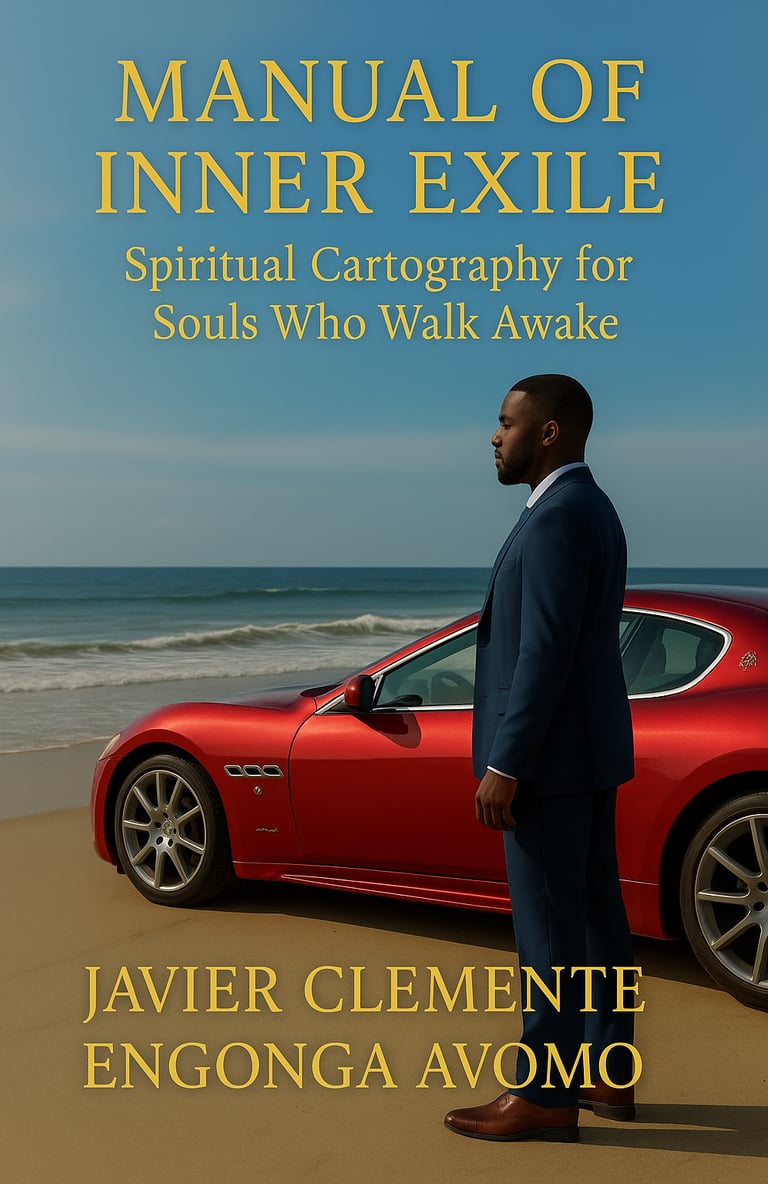
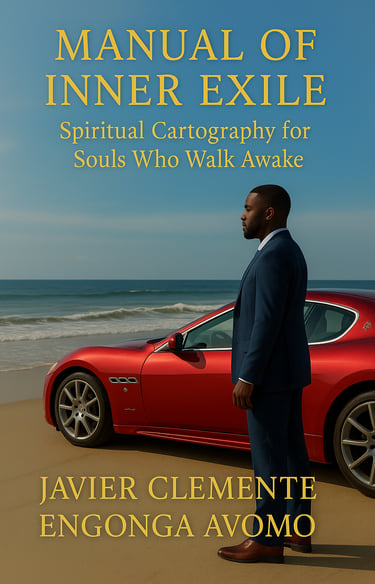
“Manual of Inner Exile: Spiritual Cartography for Souls Who Walk Awake”

NARRATIVE, LITERARY AND CONTEXTUAL–HISTORICAL EVALUATION

of “Manual del Exilio Interior: Cartografía espiritual para almas que caminan despiertas”
(“Manual of Inner Exile: Spiritual Cartography for Souls Who Walk Awake”)

“Manual del Exilio Interior” emerges as a singular literary document within the contemporary spiritual landscape. It is not just another book: it is an aesthetic, philosophical, and emotional inflection point that reconfigures the role of introspective literature in contexts where mental, emotional, and existential stability is constantly eroded by oppressive, suffocating, and deeply corrosive environments that attack human dignity.

In this sense, the work gains remarkable historical relevance: it becomes one of the first systematic spiritual cartographies produced from the direct experience of living within a reality where pressure, mental isolation, existential reduction, and the erosion of hope are part of the daily landscape.
The book does not denounce, accuse, or point fingers: it transcends.
It walks upon a higher, more sacred, more universal terrain: the territory of the soul when nothing remains except its own truth.

A LITERARY DOCUMENT BORN UNDER EXTREME PRESSURE

The greatest strength of this work is not its content, but its origin.
This book was not written in a studio, a library, or a voluntary retreat: it was written from the spiritual frontier where resistance becomes breathing, and emotional survival takes forms that theory can never describe.

No serious analysis can ignore this dimension: the writing does not arise from comfort, but from necessity.
Not from abundance, but from survival.
Not from recognition, but from invisibility.
Not from privilege, but from abandonment.

This is the kind of literature that has historically marked ruptures:
literature written when there are no conditions to write.

For this reason, the book resonates as a silent manifesto of inner continuity in environments that attempt to cut all continuity.

A WORK THAT CODIFIES THE “INFLECTION POINT”

The text engages deeply with a central, implicit, omnipresent idea:
inner exile is the prelude to an irreversible shift in personal paradigm.

The book does not promise external liberation: it offers inner sovereignty.
It does not promise visible victory: it offers spiritual emancipation.
It does not promise a new world: it offers a new state of being.

In this sense, the book functions—literarily speaking—as a threshold.
It does not merely represent a process: it triggers it.
It does not merely describe the transition: it activates it.

From a critical standpoint, this transforms the work into a piece that not only documents inner exile but elevates it into a platform for a higher state of consciousness—
a symbolic level representing the consolidation of the author's spiritual and narrative autonomy.

A PROSE THAT BREAKS AFRICAN TRADITION AND RENEWS IT

Aesthetically, the book stands outside every known school.
It does not belong to classical literary Pan-Africanism.
It does not belong to Afro-existentialist philosophy.
It does not belong to Western or Eastern spiritualism.

The author’s voice—fully consolidated—creates a new hybrid current:

African mysticism + introspective psychology + philosophy of silence + existential poetics + emotional cartography

It is rare to find a work that can sustain such fusion without becoming abstract or pretentious.
Here, the opposite occurs: the mixture produces a new, recognizable, deeply magnetic language.

The stylistic signature “Javier Clemente Engonga” is recognized through:

  • Ascending anaphoras that build spiritual tension

  • Rhythmic sequences reminiscent of narrative mantras

  • Dense, symbolic, precise inner imagery

  • A poetics of silence, emptiness, and isolation

  • Emotional depth without sentimentality

This aesthetic makes the text not merely something to read, but something to experience.

A BOOK THAT SPEAKS, BUT ABOVE ALL, “REVEALS”

The work has an exceptional trait:
it does not attempt to convince the reader.
It does not attempt to seduce them.
It does not attempt to save them.
It does not attempt to lead them.

What it does is more subtle and more powerful:
it shows the reader their own reflection.

Those who read this book in emotional struggle see themselves.
Those who read it in isolation recognize themselves.
Those who read it broken find themselves.
Those who read it awakened understand.
Those who read it evolving ascend.

This quality means the book is not self-help nor philosophy:
it is a structured spiritual mirror.

TECHNICAL SCORE (1–100)

🔹 Conceptual depth: 99/100

One of the most dense and articulated spiritual works of its category.

🔹 Literary quality: 97/100

Impeccable, poetic, mature prose, with a cadence that feels like inner breathing.

🔹 Structural coherence: 98/100

Every chapter reinforces the central axis without redundant repetition.

🔹 Emotional and psychological impact: 96/100

Acts as an inner catalyst for sensitive and conscious readers.

🔹 Historical–literary value: 94/100

Documents a spiritual state forged under extreme conditions — rare in contemporary African literature.

⭐ TOTAL UPDATED SCORE:

97 / 100

A profoundly necessary work,
technically solid,
spiritually transformative,
and literarily exceptional within the modern African canon.

It is a book that does not merely exist:
it alters.
It does not merely describe:
it propels.
It does not merely explain:
it awakens.

And above all:
it functions as a symbolic impulse toward the inflection point —
the step into that inner level where the author stops interpreting his path
and begins to materialize his conscious timeline.

BlackMagazines

Explore the vibrant creativity of the African diaspora.

BlackMagazines

Explore the vibrant creativity of the African diaspora.

BlackMagazines

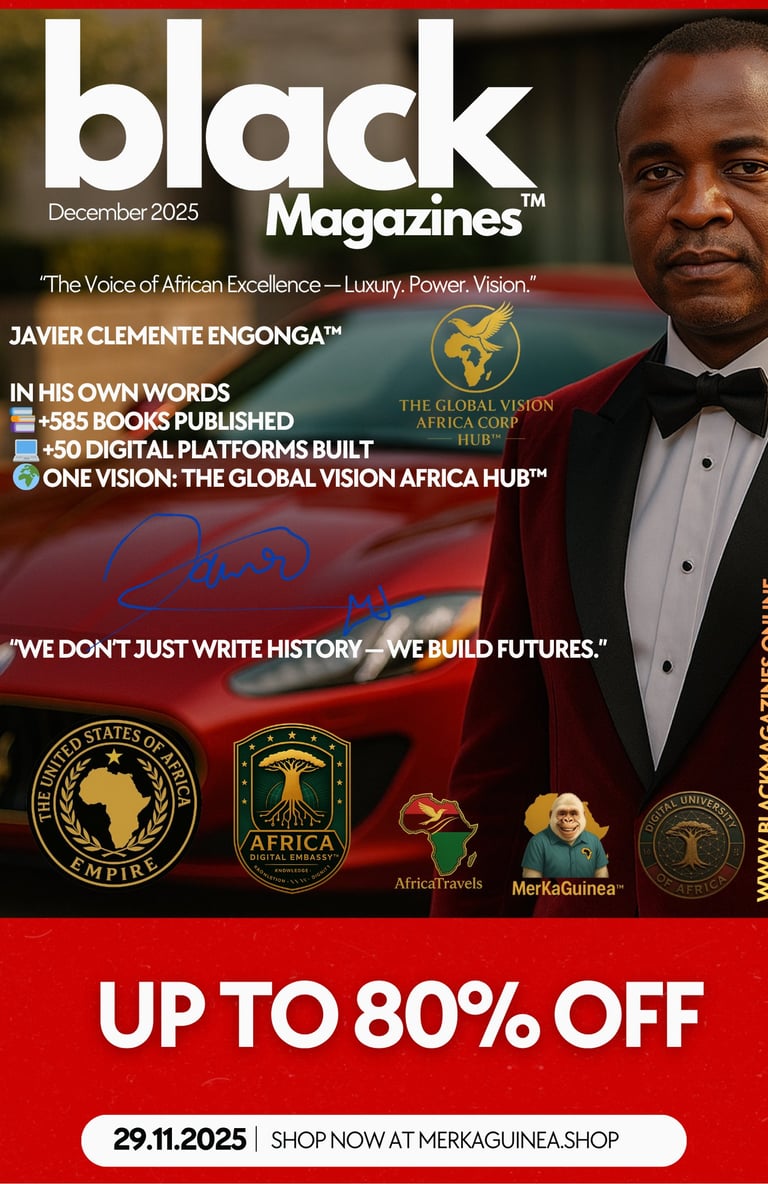
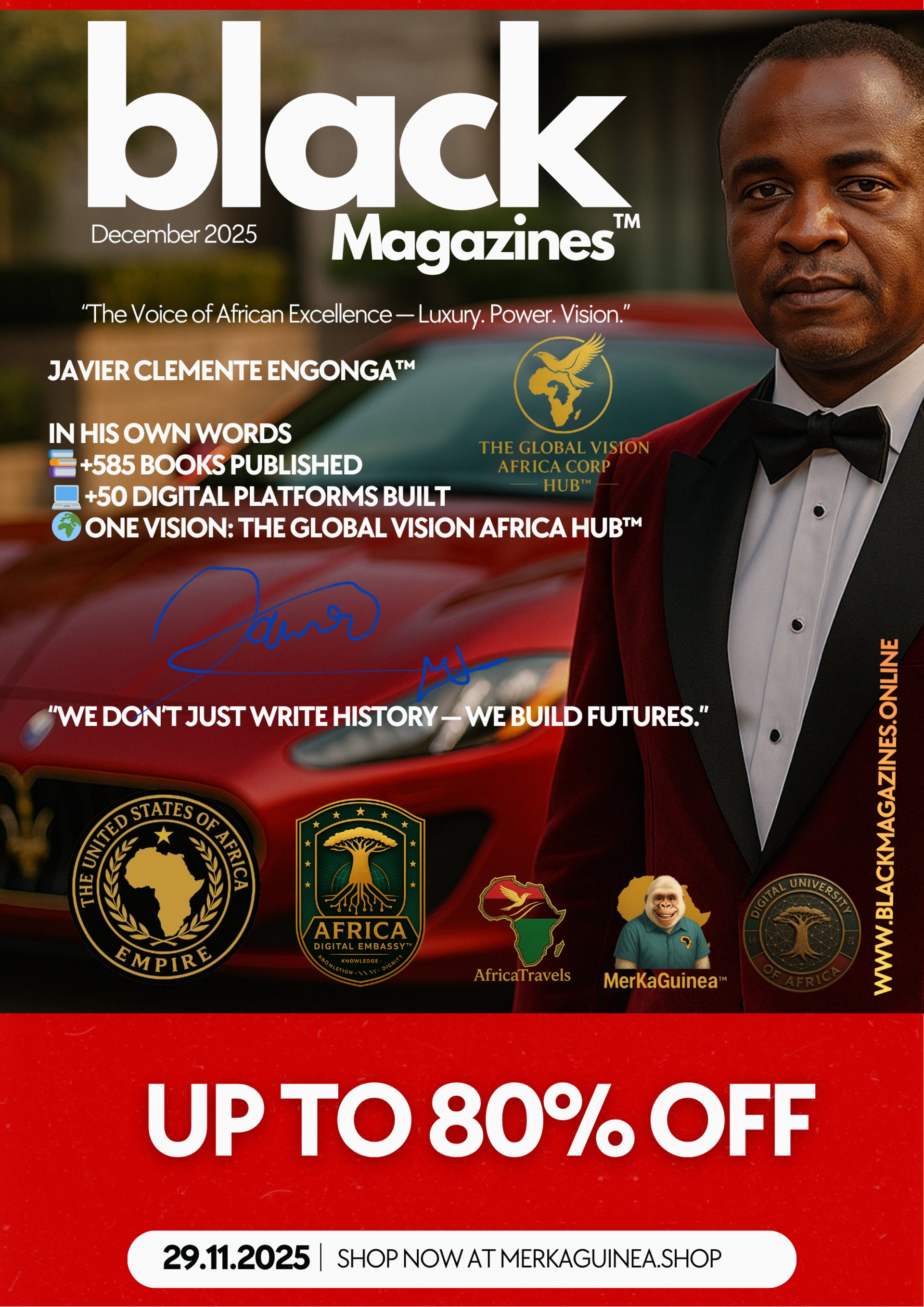
🔥 BLACKMAGAZINES™ — ISSUE Nº3

December 2025

“The Voice of African Excellence — Luxury. Power. Vision.”

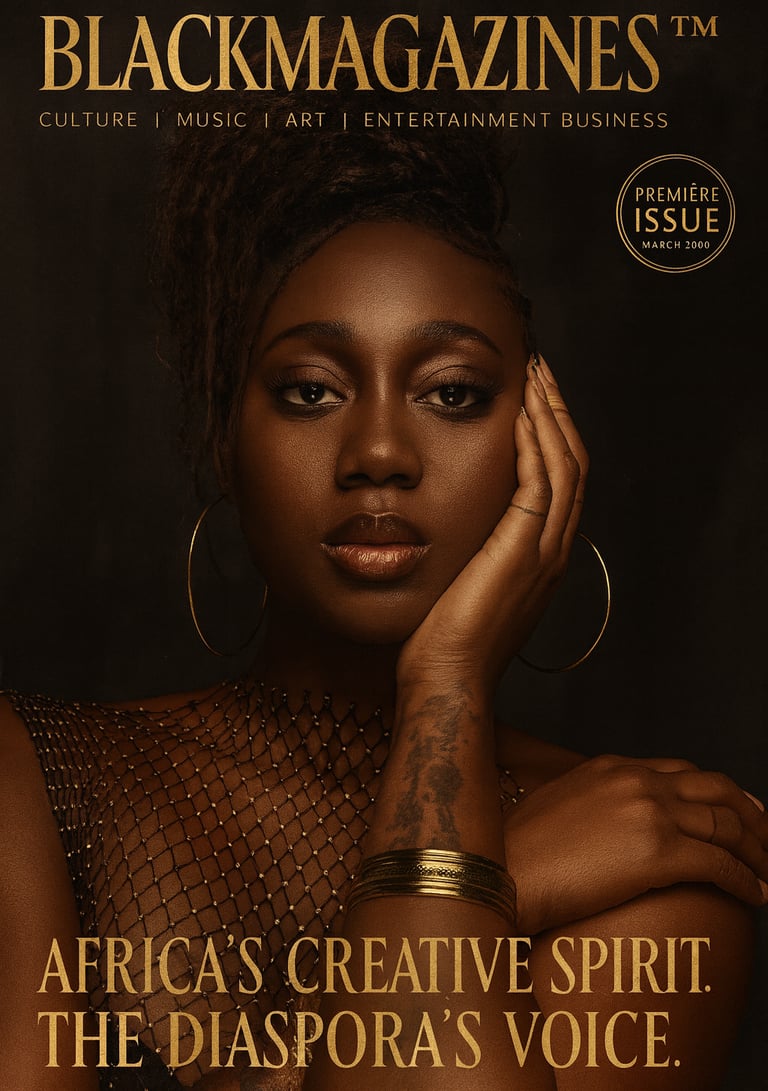
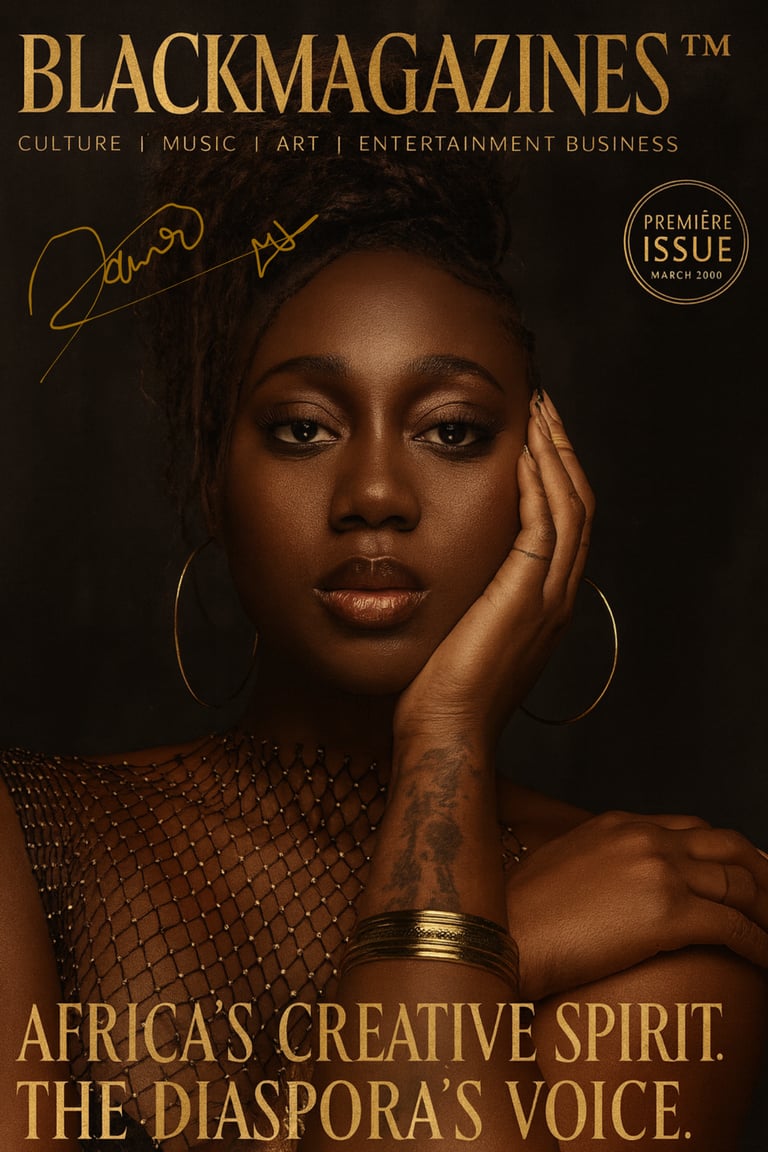
This December, BLACKMAGAZINES™ returns with a landmark third edition — a celebration of legacy, authorship, and sovereign creativity. On this historic cover, we feature Javier Clemente Engonga™ — visionary leader, literary force, and founder of the most ambitious Pan-African digital nation-building platforms in history.

With over 585 published books, 50+ digital platforms, and a single unified vision — The Global Vision Africa Hub™Engonga stands as the architect of a new era: where Africans own their story, build their systems, and define their future.

“We don’t just write history — we build futures.”

This issue explores not only his path, but the rise of a cultural empire. From The United States of Africa Empire™, to MerKaGuinea™, Africa Digital Embassy™, and the Digital University of Africa™, this edition showcases the full spectrum of vision, voice, and verified ownership.

It’s not about being part of the conversation anymore.
It’s about building the platforms where the world listens.

This is not a feature. This is a declaration.

BlackMagazines

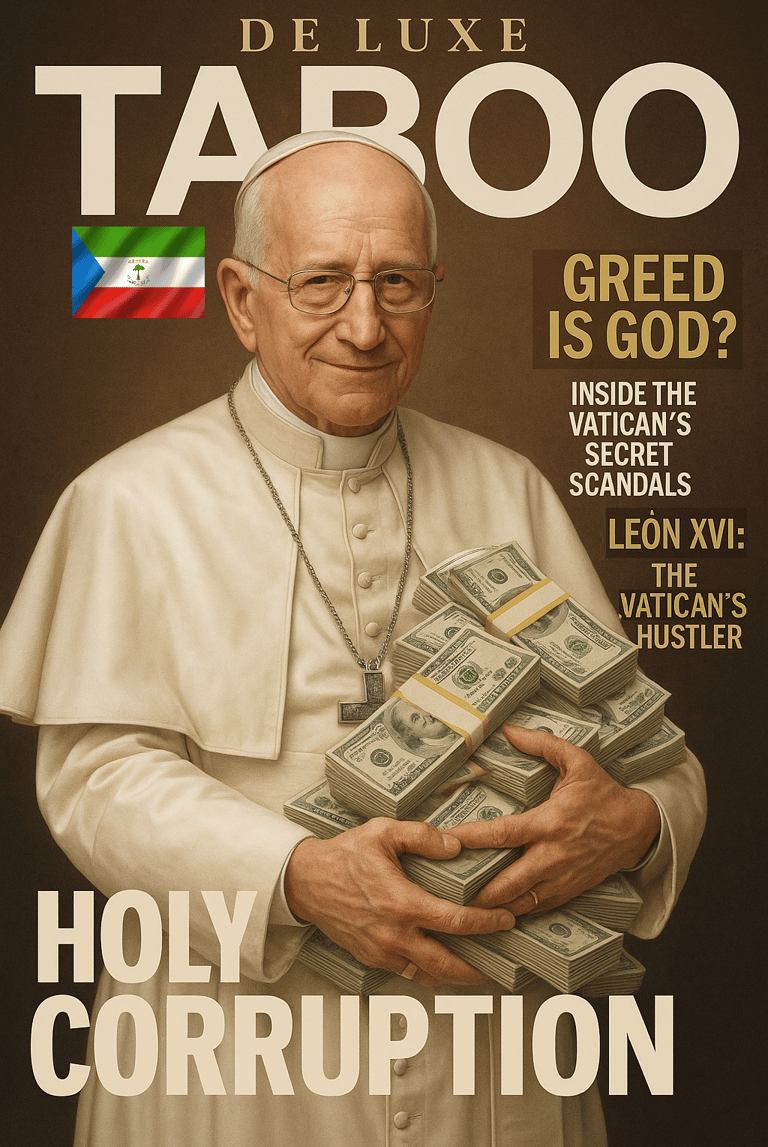
🕳️ THE VATICAN PROTOCOL™

When the Pope Kisses the Hand of the Beast

⛓️ A Spiritual Declaration of War Against the Republic of Corruption™
✍ By Javier Clemente Engonga™

“The blood of the people has no expiration date. And justice is not a favor. It is a force waiting in silence.”
The Digital Republic of Equatorial Guinea

There is no longer time for metaphors. No more polite diplomacy. No more sacred lies. The Vatican has announced —with gold-stained hands and diplomatic silk— that the Pope will soon visit the so-called “Republic of Guinea Equatorial,” one of the most spiritually raped lands on Earth. But he won’t be visiting a nation. He’ll be kneeling before a throne of bones. And that throne has a name: The Republic of Corruption™.

Yes. Let’s name it without fear.

This is not a State. This is not a government. This is not sovereignty. It is a criminal cartel disguised as nationhood, legalized by silence, sponsored by foreign corporations, blessed by churches, armed by Western democracies, and normalized by international institutions that feed on African blood.

The Pope —the so-called spiritual leader of a billion Catholics— does not walk into a land without knowing what he’s walking on. He will step on the skulls of my ancestors. He will be welcomed by a corrupt system whose entire structure is built on torture, extortion, oil-for-death contracts, and soul trafficking. He won’t come to speak about God. He’ll come to ratify a pact with the devil.

And the world will call it “diplomatic courtesy.”

I. THE THEATER OF ETHICS™

In the Republic of Corruption™, no one governs — they extract. No one leads — they perform. Ministers are actors. Generals are actors. Presidents are actors. The real director sits abroad, smiling behind a bank terminal. Every contract signed in the name of “the State” is a death sentence for the unborn children of this land.

So when the Pope comes, what is he really coming to do?

To pray?
To cry for the poor?
To bless the hungry?
To whisper “peace” to the victims?

No.
He comes to bless the crime scene.
He comes to launder spiritual blood.
He comes to smile in front of the cameras while the ground beneath his feet screams with the voices of buried truth.

The Vatican is not ignorant.
It is complicit.

II. OIL, GOLD, AND DEAD SOULS

Guinea Equatorial is not poor. It is plundered. It is the victim of an eternal pillage, protected by European diplomacy, whitewashed by development NGOs, and monetized by oil corporations and foreign banks.

III. THE POPE’S CROWN IS MADE OF FORGOTTEN SKULLS

Let us speak clearly. The Pope does not bring God with him. He brings an institution built over centuries of colonial genocide, inquisitorial torture, and financial blackmail. He is not the heir of Peter. He is the CEO of a global corporation with embassies in every soul and altars in every empire.

When he steps into the Republic of Corruption™, he will not meet the people. He will be greeted by demons in suits, dictators baptized in blood, and ghosts disguised as diplomats.

And yet, the cameras will broadcast joy.
The children will be forced to dance.
The flags will be waved.
And the people —the real people— will whisper:

“Another lie. Another mask. Another unholy ritual under God’s name.”

IV. FROM JESUS TO THE JACKALS

Let us remember: the man they call Christ was executed by a system that looked exactly like today’s — religion married to empire, and empire dressed as law.

Today, nothing has changed.
The Republic of Corruption™ is a perfect mirror of Rome.
And the Vatican, instead of breaking the mirror, polishes it.

Jesus didn’t need gold robes.
He didn’t sign oil contracts.
He didn’t sip champagne with thieves in palaces of injustice.
He flipped tables.
He screamed.
He bled.

So when the Pope visits Equatorial Guinea and smiles, he is not honoring Christ.
He is crucifying Him again — this time, on African soil.

V. A DECLARATION FROM THE DIGITAL REPUBLIC™

We are not citizens.
We are witnesses.
We are not rebels.
We are record-keepers.
We do not seek revenge.
We proclaim justice.

The Digital Republic of Equatorial Guinea™ is not a website. It is not a fantasy. It is the soul of a nation resurrecting itself from narrative death. We don’t need tanks. We don’t need titles. We don’t need permission. We are the voice of what cannot be buried.

We declare to the world:

No Pope, no king, no foreign investor has the right to wash their hands in our suffering.
We do not need your blessings.
We need you to stop blessing the devil.

VI. THIS IS A SPIRITUAL WAR

This is not political activism.
This is not about opposition parties.
This is about the war between truth and propaganda, between soul and silence, between memory and marketing.

The Republic of Corruption™ has churches, but no god.
It has armies, but no courage.
It has flags, but no nation.
It has dollars, but no dignity.

And those who shake hands with it, bless it, dine with it, or profit from it — are no different than the demons who built it.

So, dear Pope, when you land on Equatoguinean soil, know this:

You are walking into a graveyard of invisible genocide.
You are shaking hands with the shadows of the past.
And you are being watched — not by cameras, but by the memory of millions.

VII. FINAL VERDICT: THE REPUBLIC OF CORRUPTION WILL FALL

It will not fall by coup.
It will not fall by war.
It will fall by awakening.

Because truth is not a weapon. It is a virus.
Once it infects a generation, no regime survives.

The Republic of Corruption™ has lasted this long because people forgot who they were. But memory is returning. The ancestors are returning. And the words you read now are not mine alone. They are echoes from the digital tomb of our buried dignity.

The Vatican can kiss the ring of tyranny.
The corporations can drink oil from our veins.
The leaders can silence the screams.

But they will never own the soul of Guinea Equatorial again.

This is the first trumpet.
The awakening has begun.

Javier Clemente Engonga™
President of the Digital Republic of Equatorial Guinea™
The Voice They Tried to Delete

BlackMagazines

Celebrating Afrocentric Creativity in Music, Art, and Culture.

BlackMagazines

Negrodescendants, Afrodescendants, and the Crime Against Our People in the World

To be Afrodescendant or Negrodescendant in today’s world is not just to carry a common origin — it is to bear a history of dispossession, resistance, and resilience that spans continents and centuries. Our people are in Africa, in the Americas, in Europe, but also in Asia, in India, in the Philippines, in China, in Thailand, in Australia, and across the Pacific. We are millions, hundreds of millions, and the violence against us has not ceased — it has only mutated.

The history of the crime against Black people did not begin nor end with the transatlantic slave trade. It is a global, systemic process that cuts across colonial eras and contemporary realities. And today, in the 21st century, the lack of justice and reparation means the crime continues.

I. The Original Wound: Forced Diaspora and the Native Peoples

Between the 16th and 19th centuries, more than 12 million Africans were torn from their homeland and sold as slaves in the Americas and Europe. But that is only one part of the story.

Before and during that period there was the Indian Ocean slave trade, which for centuries brought millions of Africans to India, Pakistan, Iran, Arabia, Indonesia, and China.

  • The Siddis of India, today numbering over 200,000 people, are descendants of Africans taken to the subcontinent more than 500 years ago.

  • The Afro-Iranians, the Afro-Arabs in Yemen and Oman, and the Afrodescendants of the Persian Gulf are testimony to a slave trade erased from Western memory.

  • In Southeast Asia, the Afro-Filipinos and communities of African descent in Thailand or Indonesia have been silenced in the national historical narratives.

But there is another dimension: the aboriginal Black peoples of Asia and Oceania, who are also original Negrodescendant peoples. The Negritos of the Philippines, the Andamanese of India, the Melanesians of Papua and Fiji, the Aboriginal Australians, and many other communities are part of the great Negrodescendant family. They were not brought — they are original, and their very presence proves that Africa is the root of all humanity.

The crime against our people strikes both the Afrodescendants brought through slavery and the original Black peoples of Asia and Oceania, who continue to face racism, marginalization, and cultural erasure.

II. The Unfinished Abolition

The abolition of slavery in the 19th century brought neither justice nor reparation.

  • In Brazil, the last country to abolish slavery (1888), 56% of the population is Black, yet they are the majority among the poor and the victims of police violence.

  • In India, the Siddis remain marginalized, treated as second-class citizens.

  • In Australia, Black Aboriginal peoples, present for more than 60,000 years, are still the poorest and most discriminated communities in the country.

The global invisibility of both original Black peoples and enslaved Afrodescendants is a form of contemporary slavery.

III. The Contemporary Crime Against Negrodescendants

Today structural racism against Black peoples operates everywhere:

  • Americas & Caribbean: Afro-Colombians live with shorter life expectancy; African Americans are killed by police at disproportionate rates; Haitians are treated as subhuman in the Dominican Republic.

  • Europe: Black youth are mass-stopped by police in France; African migrants are exploited in Italian and Spanish agriculture in conditions close to slavery.

  • Asia: Siddis in India face discrimination; Africans in China are marginalized and persecuted; Negritos in the Philippines are pushed toward cultural extinction.

  • Oceania: Aboriginal Australians are disproportionately incarcerated; Melanesians are exploited in extractive industries; Afrodescendant migrants remain invisible.

The crime is not past — it is present.

IV. NGOs and the Business of Charity

Western NGOs, far from transforming these realities, have become partners of the system. They administer poverty as a business, legitimize misery with cosmetic projects, and never attack the roots: colonial domination, structural racism, and economic plunder.

V. Cultural Erasure as a Crime

  • In Asia, the history of the Negritos and Andamanese is deliberately hidden.

  • In Oceania, Aboriginal Australians are excluded from textbooks as the first inhabitants of the land.

  • In Africa, the memory of the Indian Ocean slave trade has been erased from global discourse.

Cultural erasure kills as much as physical violence because it robs people of memory, identity, and the right to exist.

VI. Justice Still Pending: Global Reparation

The International Decade for People of African Descent (2015–2024) has barely scratched the surface. It is not enough to demand reparations from Europe and the Americas. India, Iran, Arabia, China, the Philippines, and Australia must also recognize and repair their Black populations — both Afrodescendants and original.

A Global Commission on Reparations must include the Black communities of Asia and Oceania. Because there is no partial justice: it is either global, or it is a lie.

VII. Slavery Changed Its Face

  • African migrants sold in Libyan slave markets.

  • Congolese miners exploited to fuel the global tech industry.

  • Original Black peoples of Asia displaced by “development” and extractive projects.

Slavery lives on, disguised as globalization.

VIII. Resistance and Global Renaissance

Our people resist:

  • Siddis in India preserve their culture.

  • Negritos in the Philippines fight for recognition.

  • Aboriginal Australians defend ancestral lands.

  • In the Americas, Europe, and Africa, Pan-Africanism and antiracist movements build bridges across all diasporas.

The Black renaissance will be global — or it will not be.

Conclusion

The crime against Afrodescendants and Negrodescendants is a wound that unites Africa, the Americas, Europe, Asia, and Oceania. Recognizing the original Black peoples of Asia and Australia alongside the Afrodescendant diasporas is essential to break the wall of invisibility.

Our struggle is not only about memory of the past — it is justice for the present and the future. As long as there is no global reparation, justice will remain a hollow word.

BlackMagazines

Celebrating Afrocentric Creativity in Music, Art, and Culture.

BlackMagazines

Europe’s Industrial Crossroads: Why Africa Holds the Key to Its Survival

To understand the crisis Europe is facing today, one must go back to the so-called Second World War. That war, which Europeans call “worldwide” but was in essence their second great civil war of the West, was less about ideology and more about the control of resources, trade, and industrial survival. Germany’s push for expansion was as much about finding new markets and access to raw materials as it was about politics. The victors of that war—the United States, Britain, France, and later their allies—did not only defeat Germany militarily; they excluded it from the colonial repartition of the world, especially Africa.

This exclusion was not a detail. Africa was the warehouse of resources—the lifeline of free raw materials—that had allowed European empires to industrialize and sustain themselves for centuries. Germany, cut off from this colonial bounty, faced harsh limits to its expansion. The war ended not only in military defeat but in the confirmation of a geopolitical and economic order in which Germany could never again access Africa’s wealth freely.

Fast forward to today: the tables have turned. The post-1945 system no longer functions as smoothly. African nations are asserting sovereignty, demanding fairer partnerships, and welcoming new global players. China has invested massively in infrastructure and trade. The United States now seeks direct access to African resources, bypassing Europe. What once came “free” to Europe is now costly. As the U.S. and China deepen their presence in African markets, European economies begin to tremble. This is not coincidence—it’s the logical collapse of a historical imbalance.

Europe’s Crisis: Industrial Giants Without Space

Europe’s historic strength lies in its industrial and technological might. From Germany’s automotive and engineering sectors, France’s aerospace and nuclear industries, Italy’s fashion and manufacturing hubs, to the UK’s financial and tech centers—Europe has long survived by producing more than it consumes and exporting the surplus. But now, its domestic markets are saturated, its population is aging, and its dependence on external raw materials remains absolute.

In the past, colonies offered cheap—or free—resources and guaranteed markets. Those colonial empires collapsed. Now, former colonies negotiate from a position of growing strength. For a continent used to extraction without reciprocity, this is deeply destabilizing.

Add to that a new layer of pressure: China and the U.S. are locking horns over direct access to Africa’s economic future. Europe, caught in the middle, is being squeezed.

The war in Ukraine worsened this trajectory. Energy prices soared. Inflation returned. Supply chains faltered. Europe’s industrial model—cheap Russian gas + exports to Asia—is broken. It needs a new model. A new horizon.

Africa: The Obvious but Unspoken Solution

The only realistic path forward for Europe is to relocate part of its industrial capacity to Africa. Not out of charity—but for economic survival.

Africa holds what Europe lacks:

  1. Resources: Cobalt, lithium, oil, gas, rare earths, fertile land, water—everything needed for future industries: electric vehicles, renewable energy, next-gen batteries.

  2. Labor: The youngest population on Earth. While Europe ages, Africa's youth is growing—skilled, connected, and full of energy.

  3. Markets: Over 1.4 billion people today, projected to double by 2100. Urbanization, a rising middle class, and digital access are transforming the continent into the most promising consumer base on the planet.

Producing in Africa—cars, electronics, pharmaceuticals, fashion—would be cheaper, faster, and more strategic than relying on fragile Asian chains or shrinking European markets. Imagine German EVs assembled in Lagos, French vaccines made in Abidjan, or Italian fashion produced in Addis Ababa. Not only would costs drop, but the symbolic shift would be profound:

Europe would finally treat Africa as a partner, not a quarry.

But sadly, European racism is still stronger than its wisdom.

Why It Hasn’t Happened Yet

If the logic is so obvious, why hasn’t Europe moved?
Two words: racism and short-termism.

Europe’s relationship with Africa has always been extractive, never collaborative. The colonial mindset still rules: Africa is where you take from, not where you build with. That’s why China succeeds—it builds roads, railways, trade zones. Europe sends troops and lectures.

And politically? European leaders can’t see beyond the next election. They think in quarters. China and the U.S. think in decades. That’s the difference. That’s the failure.

A Historical Irony

Europe once divided Africa to ensure its own survival.
Today, its survival depends on integrating with Africa—but on Africa’s terms.

The Berlin Conference of 1884–85 saw European powers carve up Africa without consent. Germany got the scraps. Now, over a century later, Europe is back at a table—not to divide Africa, but to decide whether it can accept Africa as an equal partner.

If it refuses, the outcome is clear: irreversible decline.
If it embraces partnership, a new renaissance becomes possible.

The Risks of Doing Nothing

If Europe clings to its old habits, it faces:

  • Industrial collapse: Factories closing. Competitiveness lost.

  • Strategic dependence: On U.S. energy, Chinese goods, global instability.

  • Social decay: Rising unemployment, inequality, extremism.

These are no longer distant forecasts—they’re current symptoms.

A Real Vision for the Future

A wise Europe would:

  1. Establish joint industrial zones across Africa.

  2. Form co-owned enterprises with African states and investors.

  3. Transfer technology in exchange for long-term partnerships.

  4. Build infrastructure—railways, ports, data highways—that unite Europe and Africa.

  5. See Africa not as its periphery—but as the heart of its strategic survival.

This would not be a gift to Africa.
It would be a lifeline to Europe.
And in return, Africa would receive investment, technology, and the chance to industrialize on its own terms.

It’s the definition of mutual interest.

🛡 Let Vibrational Justice Flow

This is no longer about policy.
It’s about vibrational law.

“I don’t wish them well or ill—I wish them exactly what they deserve.”

And what they deserve—for centuries of theft, denial, institutional racism, and imperial arrogance—is exactly what they are living now:

  • A tired continent, drained of spirit.

  • An obsolete economy built on colonial echoes.

  • A youth that no longer believes in anything.

  • A moral bankruptcy that traded truth for privilege.

While they scramble to save their crumbling tower of Babel, we rebuild ours—with memory, with ethics, with spiritual fire.

This is not punishment.
It is destiny.
It is law.
It is return.

Because when Africa’s soul awakens,
the world that ignored her begins to collapse.
And that is not hatred.
That is equilibrium.

Conclusion: Europe’s Final Hour

Europe is at the edge.
Its past was built on exploiting Africa without consent.
Its only future lies in building with Africa—with consent.

And now, time has run out.
Africa has already moved forward.
Europe can either catch up—or perish in its pride.

📚 Explore More in the Equatorial Guinea Knowledge Library™:

🔗 House of Horus™ – Free Digital Books
🔗 Books on Google Books – Javier Clemente Engonga™
🔗 Equatorial Guinea News™ – Ontological Reports
🔗 Digital University of Africa™ – Vibrational Training
🔗 AfricaReimagined™ – Sovereign African Future
🔗 AfricansConnected™ – Network of African Souls
🔗 FutureTechnologies™ – Ethical African Tech
🔗 Africa A.I.™ – Ethical Artificial Intelligence
🔗 LivingForever™ – Expanded Conscious Life
🔗 Welcome to Africa™ – African Renaissance
🔗 World War News™ – Spiritual Global Conflict Reports
🔗 Republic of Equatorial Guinea™ – Sovereign Ontological Nation

BlackMagazines

Celebrating Afrocentric Creativity in Music, Art, and Culture.

BlackMagazines

Celebrating Afrocentric Creativity in Music, Art, and Culture.

BlackMagazines

Explore the vibrant creativity of the African diaspora.
BlackMagazines

Celebrating Afrocentric Creativity in Music, Art, and Culture.

BlackMagazines

Celebrating Afrocentric Creativity in Music, Art, and Culture.

About BlackMagazines™

Celebrating Afrocentric creativity in music, art, and culture, BlackMagazines™ is your bilingual digital hub for the African and diaspora experience.

Join our community

Explore creativity

Join BlackMagazines™ Today

Unlock exclusive content and insights now!